Engineering & infrastructure experts
Find AI engineers specializing in applications, retrieval-augmented generation, data systems, and production infrastructure.

Dr. Danqi Chen
Princeton University
Associate Professor of Computer Science at Princeton University and Director of the Princeton NLP Group. Pioneered Dense Passage Retrieval (DPR) for open-domain question answering and contrastive sentence representation (SimCSE), laying the bedrock for modern semantic search and dense embedding retrieval.
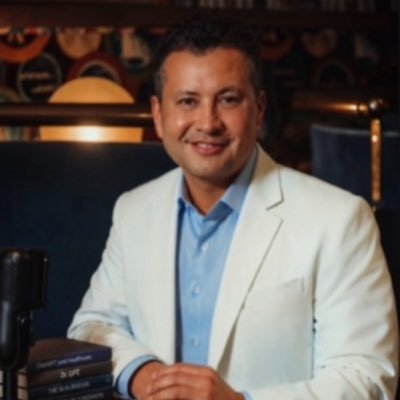
Dr. Harvey Castro
Healthcare AI Advisory
Emergency medicine physician, healthcare executive, author of 'ChatGPT and Healthcare', and LinkedIn Top Voice with over 100,000 followers. Advises hospital systems, health tech startups, and medical device companies on clinical generative AI, HIPAA compliance, and doctor-in-the-loop workflows.

Dr. Ji Lin
NVIDIA / MIT
Senior Research Scientist at NVIDIA and former MIT PhD researcher. First author of AWQ (Activation-aware Weight Quantization) and MCUNet, pioneering hardware-friendly low-bit compression algorithms that enable running frontier models on edge accelerators and consumer GPUs.
Dr. John Schulman
Anthropic / Thinking Machines
Co-founder of OpenAI and now research scientist at Anthropic. Invented Proximal Policy Optimization (PPO) and Trust Region Policy Optimization (TRPO). Led OpenAI's reinforcement learning from human feedback (RLHF) and post-training alignment teams that built InstructGPT and ChatGPT.

Dr. Jonathan Frankle
Databricks Mosaic AI / Harvard
Chief Scientist at Databricks Mosaic AI and Adjunct Professor at Harvard University. Discovered the Lottery Ticket Hypothesis (ICLR 2019 Best Paper) and led the training and open-source release of MPT-7B, MPT-30B, and DBRX, proving enterprise foundation models can be trained cost-effectively on commodity clusters.

Dr. Kexin Huang
Stanford University / Harvard University
Postdoctoral Research Fellow at Stanford University and Harvard Medical School. Creator of Therapeutics Data Commons (TDC) and TxGNN, the landmark foundation model for clinician-centered drug repurposing published in Nature Medicine, pioneering graph AI in biomedicine.
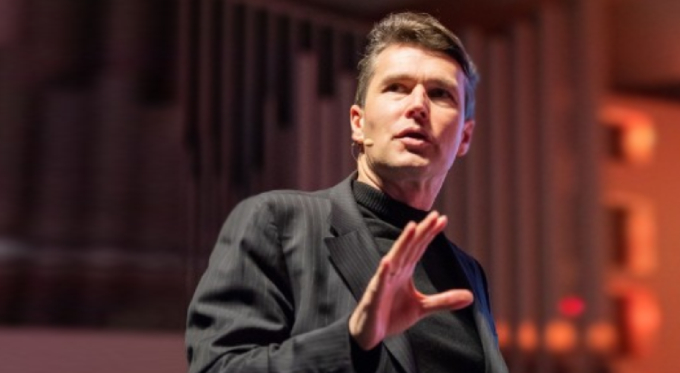
Dr. Marcell Vollmer
Prospance Inc. / Former SAP CDO
CEO of Prospance Inc. and former Chief Digital Officer at SAP and Celonis. LinkedIn Top Voice with over 200,000 followers, advising global enterprises on digital supply chain optimization, autonomous procurement agents, and enterprise AI transformation.

Dr. Matei Zaharia
Databricks / UC Berkeley
Co-founder and Chief Technologist at Databricks and Associate Professor of Computer Science at UC Berkeley. Original creator of Apache Spark, MLflow, and Delta Lake. Co-creator of DSPy (Declarative Self-improving Python modules for foundation models). ACM Doctoral Dissertation Award recipient and leading expert in scalable machine learning infrastructure.

Dr. Omar Khattab
Stanford University
Postdoctoral NLP Scholar at Stanford University under Christopher Manning and Matei Zaharia. Creator of the DSPy framework for programmatic LLM pipelines and the ColBERT efficient late-interaction retrieval architecture. Pioneer in compounding AI systems and declarative prompt optimization.
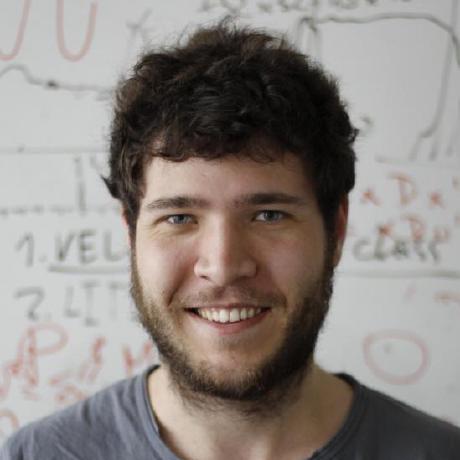
Dr. Patrick Lewis
Cohere
Research Lead at Cohere and former AI Research Scientist at Meta AI. Lead author of the seminal 2020 paper 'Retrieval-Augmented Generation for Knowledge-Intensive NLP Tasks', which created the RAG paradigm combining dense vector retrievers with parametric sequence-to-sequence foundation models.

Dr. Sasha Rush
Cornell Tech / Hugging Face
Associate Professor at Cornell Tech and Researcher at Hugging Face. Former President of ICLR. Creator of 'The Annotated Transformer', the definitive line-by-line PyTorch guide that educated an entire generation of deep learning practitioners. Pioneer of Flash-Decoding and open structured generation engines.

Dr. Sergey Levine
UC Berkeley / Physical Intelligence
Associate Professor of EECS at UC Berkeley and co-founder of Physical Intelligence (Pi). World-renowned pioneer of deep reinforcement learning for robotic control, vision-action models, and the generalist physical foundation model π₀ (pi_0).